1
The pavement disappears and wild greenery spreads out, before I even reach the outskirts. The book “The Wild Places” comes to mind. It is Robert Macfarlanes search for the last wilderness in Great Britain. After many extreme and remote hikes, he no longer finds the wilderness only at the farthest reaches of the sea, but also in the cracks in the pavements.
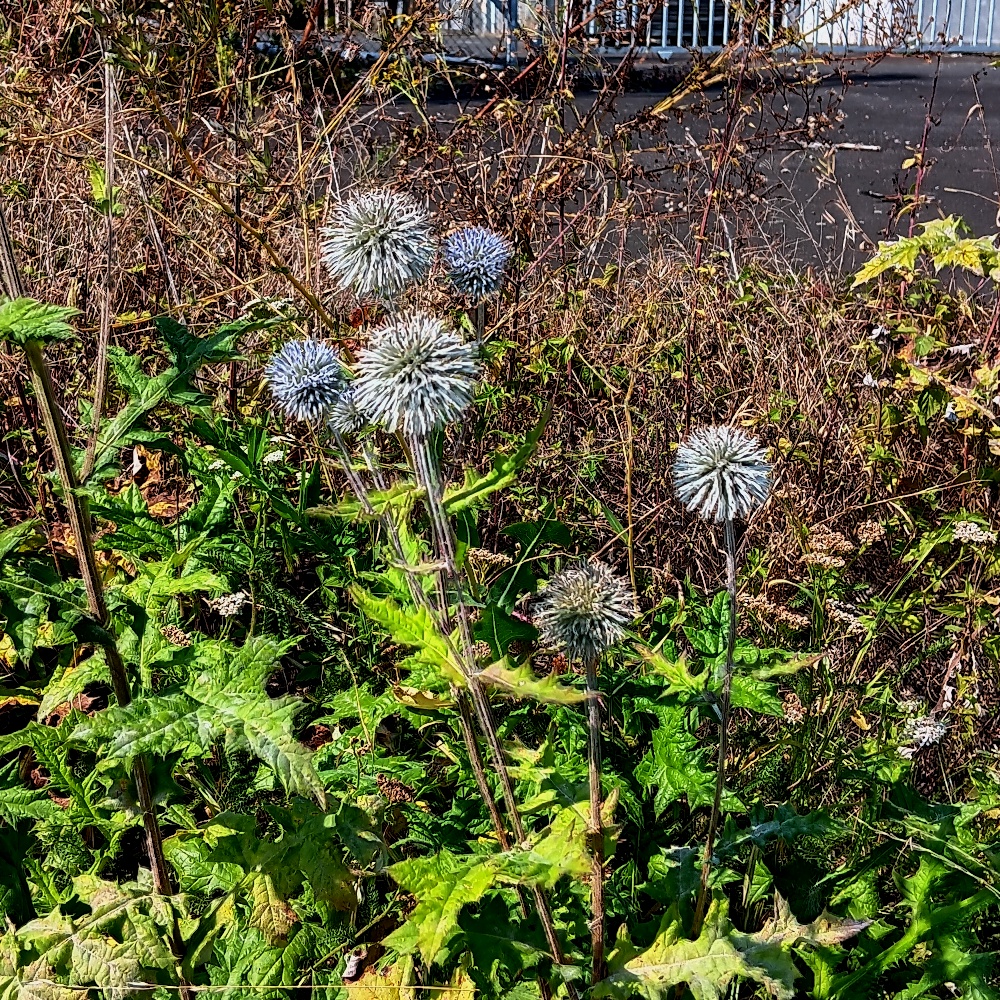
And this is exactly the kind of wild greenery that grows here. Every few steps I can name one of the plants. And of course I recognise the clumps of nettles or brambles that repeat themselves along the path. In between, lots of unfamiliar vegetation. These plants also have names. Names, that I simply don’t know. Or don’t know yet. Does the verge of the country road become a wilderness for me because I can’t name the green turmoil? A botanist in the same place probably speaks of impressive diversity and lists a long list of Latin names that are at home here.
I pay closer attention to which of these plants I can name, and which of them could even be given a place in my garden. Plants, that grow all by themselves. Without watering. Without care. Rather despite the people around them. People, who concentrate on uprooting wild plants. And yet they are there. Finally I can recognise a surprising number of them by name: Lettuce, ribwort plantain, Pyrenean cranesbill. Wild mallow: Today I only see a single flower. This roadside is probably not the perfect place for them – but a possible one. Mugwort, camomile, wild carrot. Meadowsweet is also occasionally found. I remember roadsides just a few kilometres away where it is rampant.

2
After leaving the village, I follow the cycle path for a while. It leads to one of the neighbouring villages. The wild plants push right up to the edge of the tarmac. But they remain cautious. They wait for their time, their opportunity.
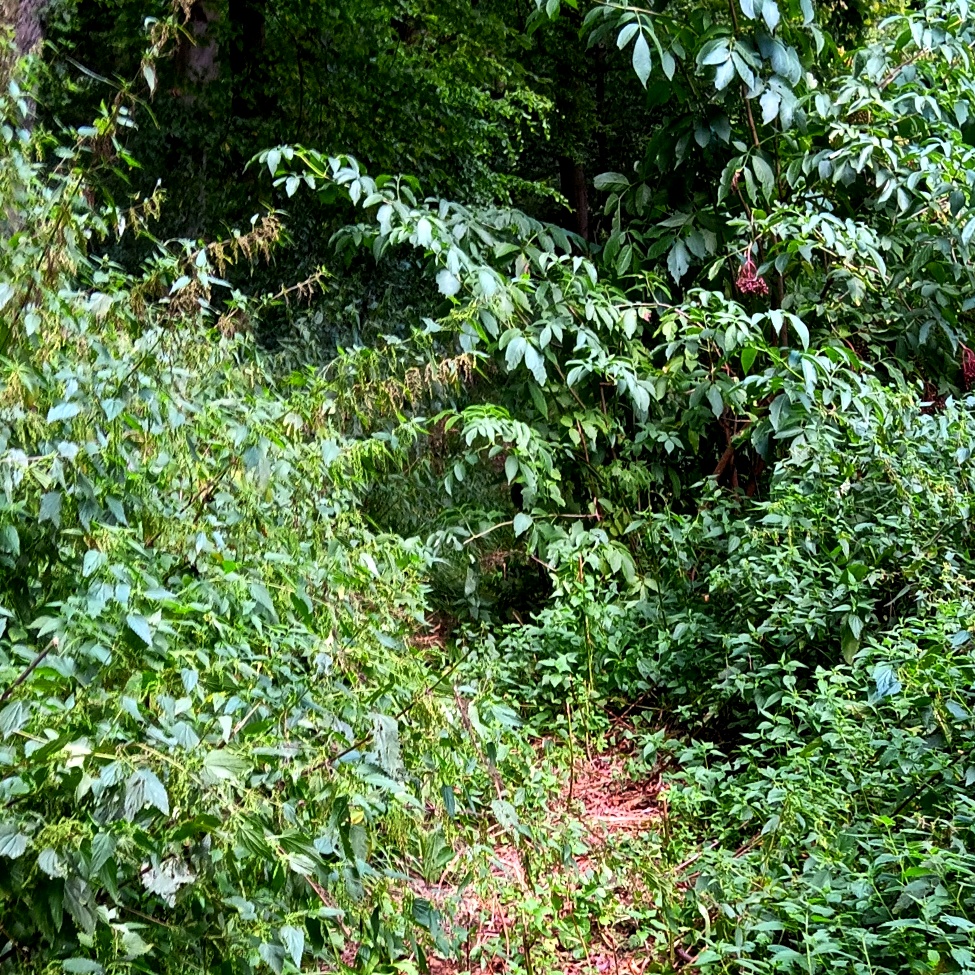
As soon as I leave the cycle path, the opportunity is there: the wilderness spills over the asphalt-free path within a few metres. Stinging nettles snake around my feet and legs, even up to my arms held protectively in front of my face.
Wilderness is not something I have to travel a long way for. It’s closer than I think. I’ve only been travelling for an hour and have already arrived in the middle of the wilderness. As long as I search for wilderness on my desk, it seems distant or lost. Then I think it is hiding in remote corners of the world, listening to unpronounceable names.
3
Now I experience wilderness as part of my everyday life. Not far away and unknown, but there, where I as a human being do not belong. A pathless area, where I can’t find my way around. But it doesn’t have to be a green wilderness. An unfinished building shell that rises eight storeys into the sky, a wilderness of concrete, is no less overgrown than this nettle path.
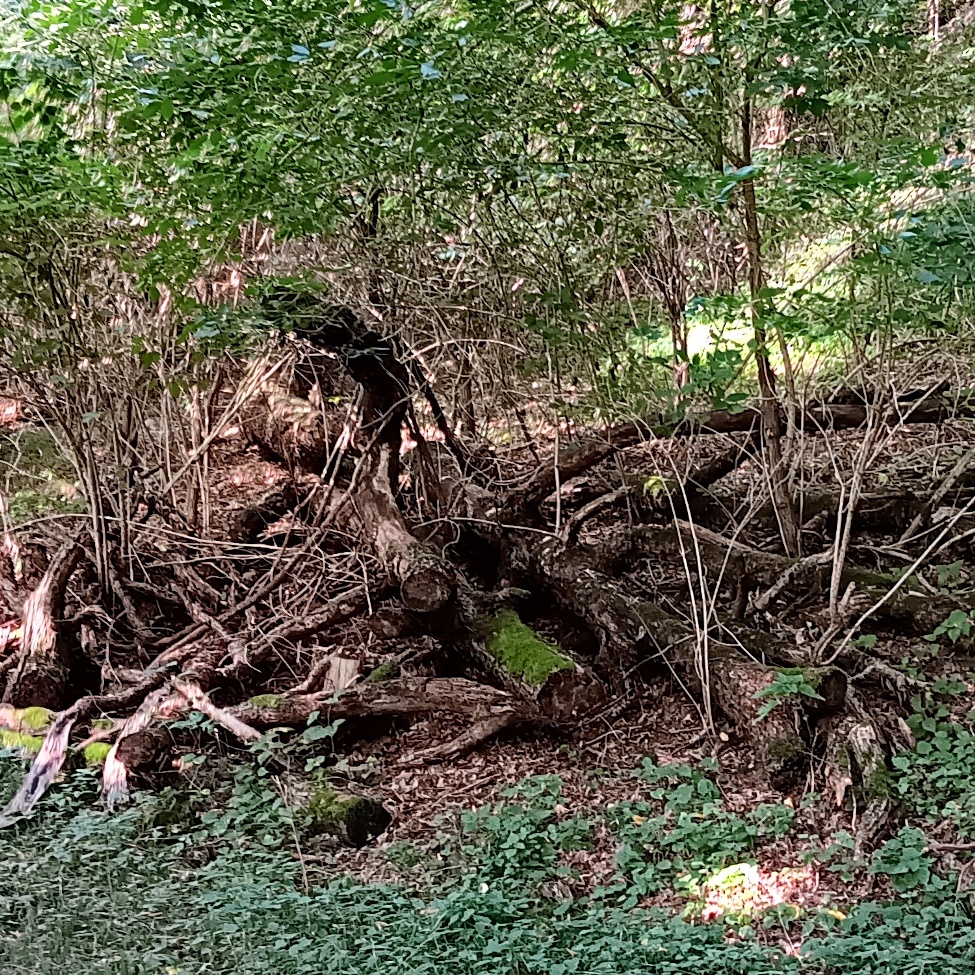
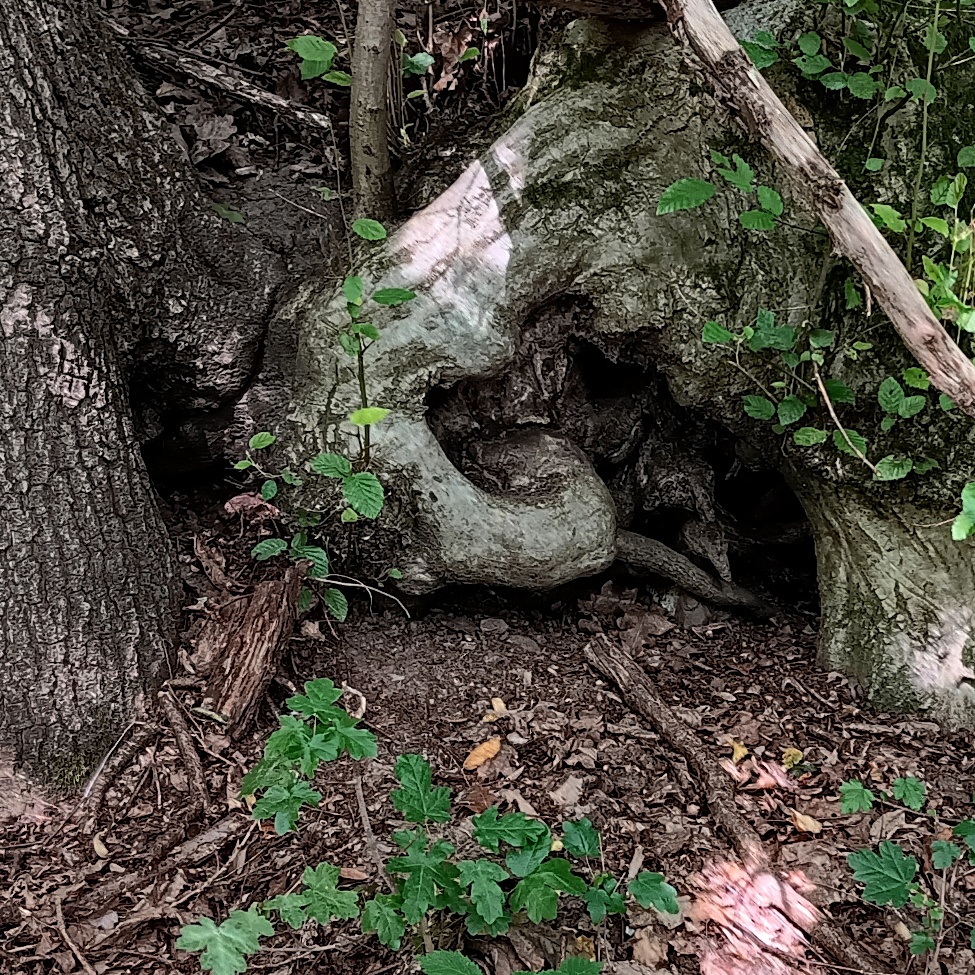
My nettle path must once have been human territory. A crumbling bench and the pressure-impregnated wooden post clearly show the human hand. Someone created a huge but well-organised pile of dead wood before the humans disappeared. Various holes in the ground and cave entrances bear witness to the new inhabitants.
Only a row of bushes and a brook separate traffic noise and wilderness. If I stand still, the cars flit along as blurred reflections behind the bushes. When did the path fall into oblivion? Was there a particular reason for it?
Naturpark Knüll, August 2024
 Worte wie Wald